8 Signs Your Safety Boots Need Replacing
Before They Fail on Site
15 September 2026
Written by Audrey Tan
1. What the Outsole Actually Does
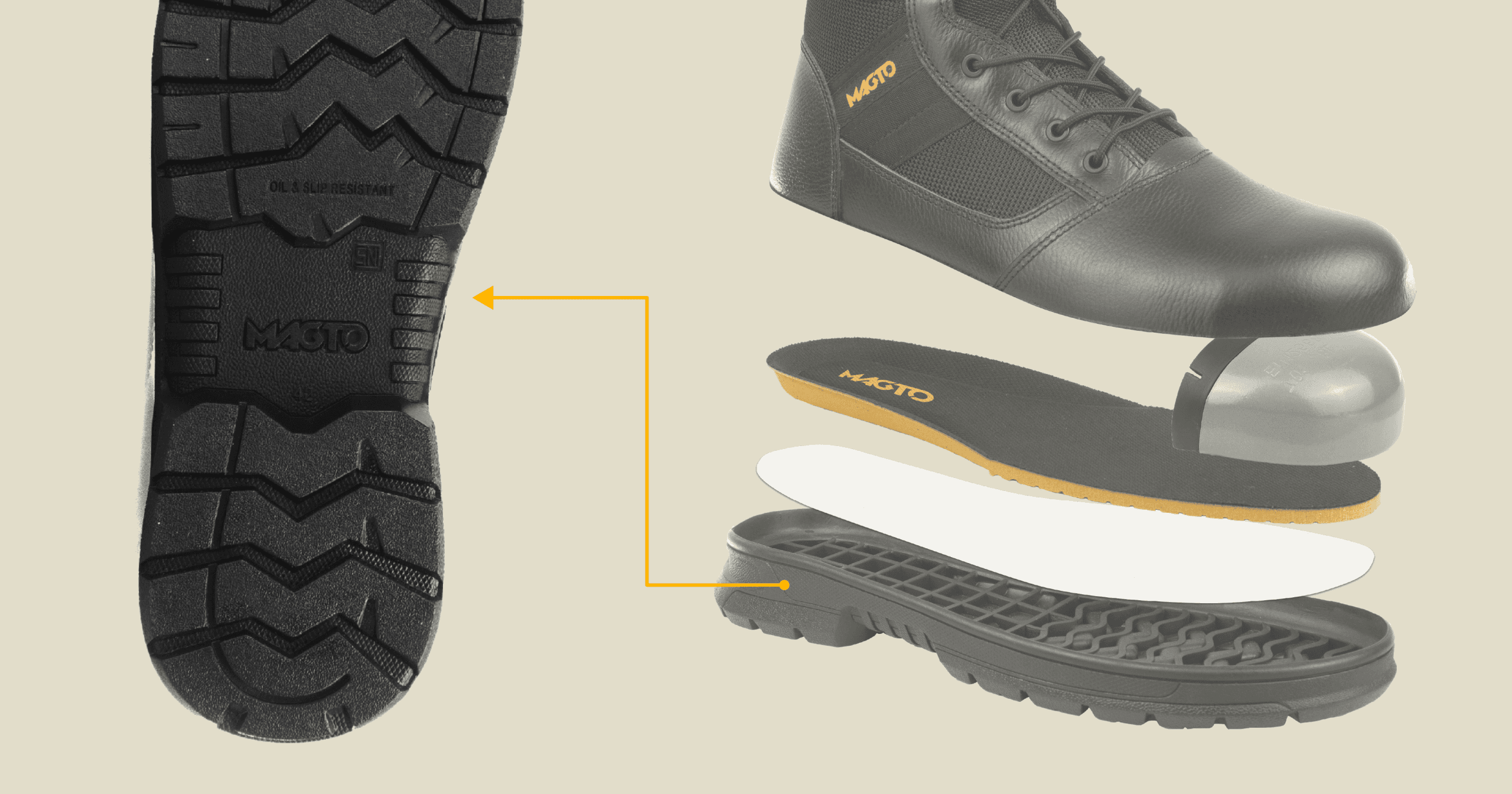
Flex the boot at the forefoot. A healthy rubber outsole flexes and returns to shape. If the outsole takes a set when bent, or if you can see visible cracks — even hairline cracks — the structural integrity is compromised. A cracked outsole won't provide reliable slip resistance or impact protection.
2. The Heel counter has softened
Squeeze the heel counter firmly with your fingers. It should feel rigid. If it compresses under moderate pressure, it's losing its structural function. A softened heel counter can't prevent ankle roll — one of the most common site injuries.
3. The insole has compressed permanently
Stand on a hard surface in the boot. If you feel the hard floor through the boot immediately — no cushioning, no give — the insole has compressed past the point of effective shock absorption. Replace the insole (if removable) or the boot.
4. The steel toe cap is visible through the upper lining
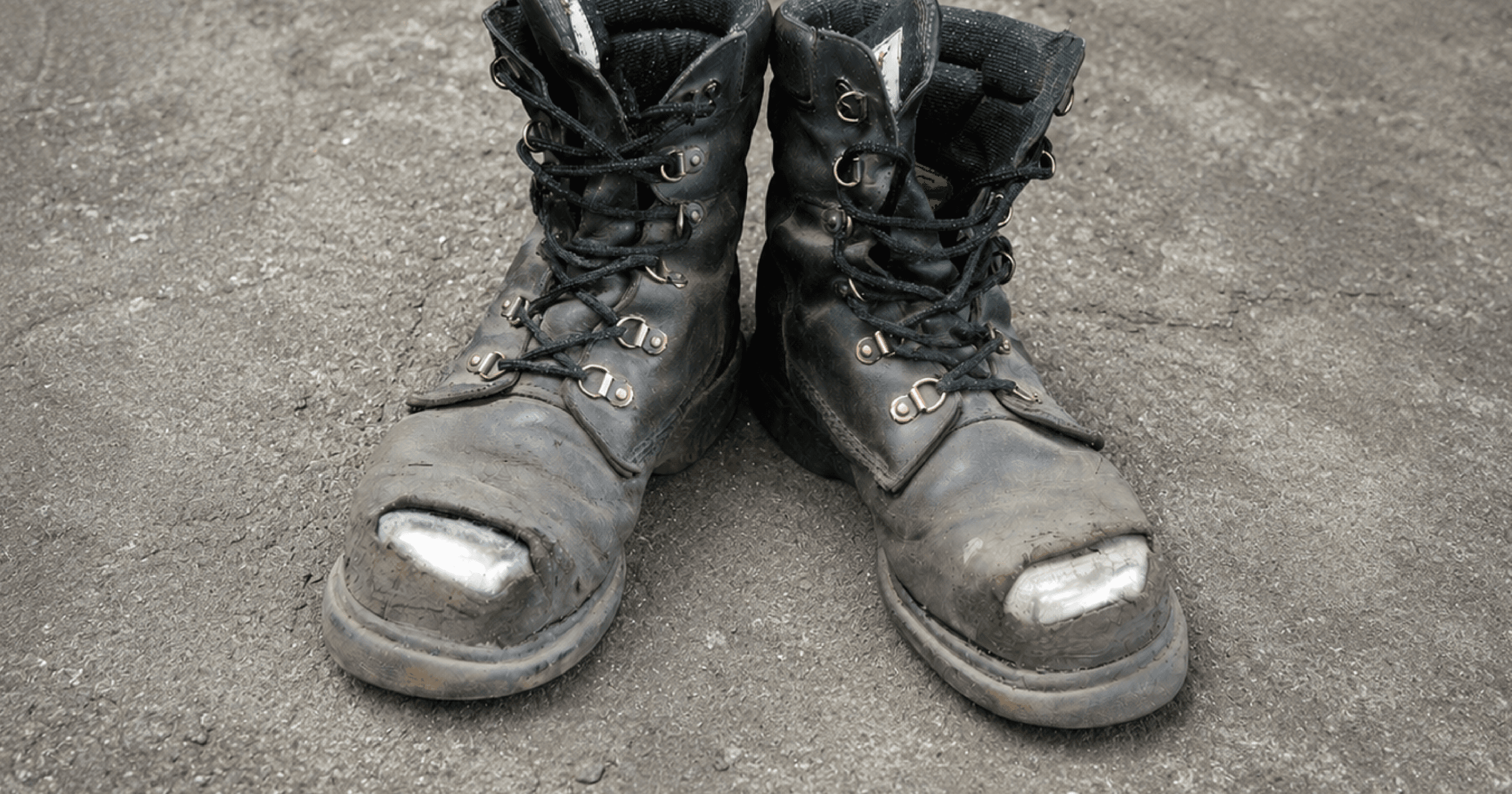
Over time, the inner lining wears through at the toe area. If you can see the steel toe cap through the lining, the protective inner layer has worn away. The toe cap is still there — but the buffer between steel and foot has failed.
5. The upper leather is cracked or splitting
Pay particular attention to the area around the eyelets and speed hooks — where the laces pass through the leather. This is a common failure point. Cracked or splitting leather at flex points means the upper is losing its structural integrity.
6. The tread path is below 2mm
Use a tread depth gauge if you have one. A rough field test: a 2mm coin inserted into the tread groove — if the coin sits flush with the top of the tread lugs, your tread is low. Below 2mm, the outsole's ability to channel water is significantly reduced.
7. The boot flexes in the wrong place
The boot should flex at the ball of the foot. If the boot is flexing at the arch, the midsole has compressed and the structural support has shifted. This is a precursor to outsole separation.
8. The boot no longer fits
Boots that have broken in correctly should still fit correctly after months of use. If a worker's foot has changed due to weight change, swelling from long hours, or a medical condition, the boot may no longer fit. A boot that's too tight causes nerve damage and bunions. A boot that's too loose defeats the purpose of the protective features.
A Practical Replacement Schedule
For workers on full shifts, 5 to 6 days per week, on hard industrial surfaces:
- General industrial work: 6 to 9 months
- Construction — mixed surfaces: 6 to 12 months
- Warehouse / logistics: 9 to 18 months
- Supervisory / site walking: 9 to 18 months
These are estimates. The 8 signs above are a better guide than any calendar.
What to Do With Old Boots
Don't pass worn boots to a new worker. Once a boot has failed any of the 8 checks, remove it from service. Destroy it if necessary — cut the upper to prevent reuse. Passing a boot past its service life is a risk you don't need to take.
Editor's Pick