Your First Guide to Safety Footwear in Indonesia
What Actually Matters (And What Doesn't)
15 July 2026
Written by Audrey Tan
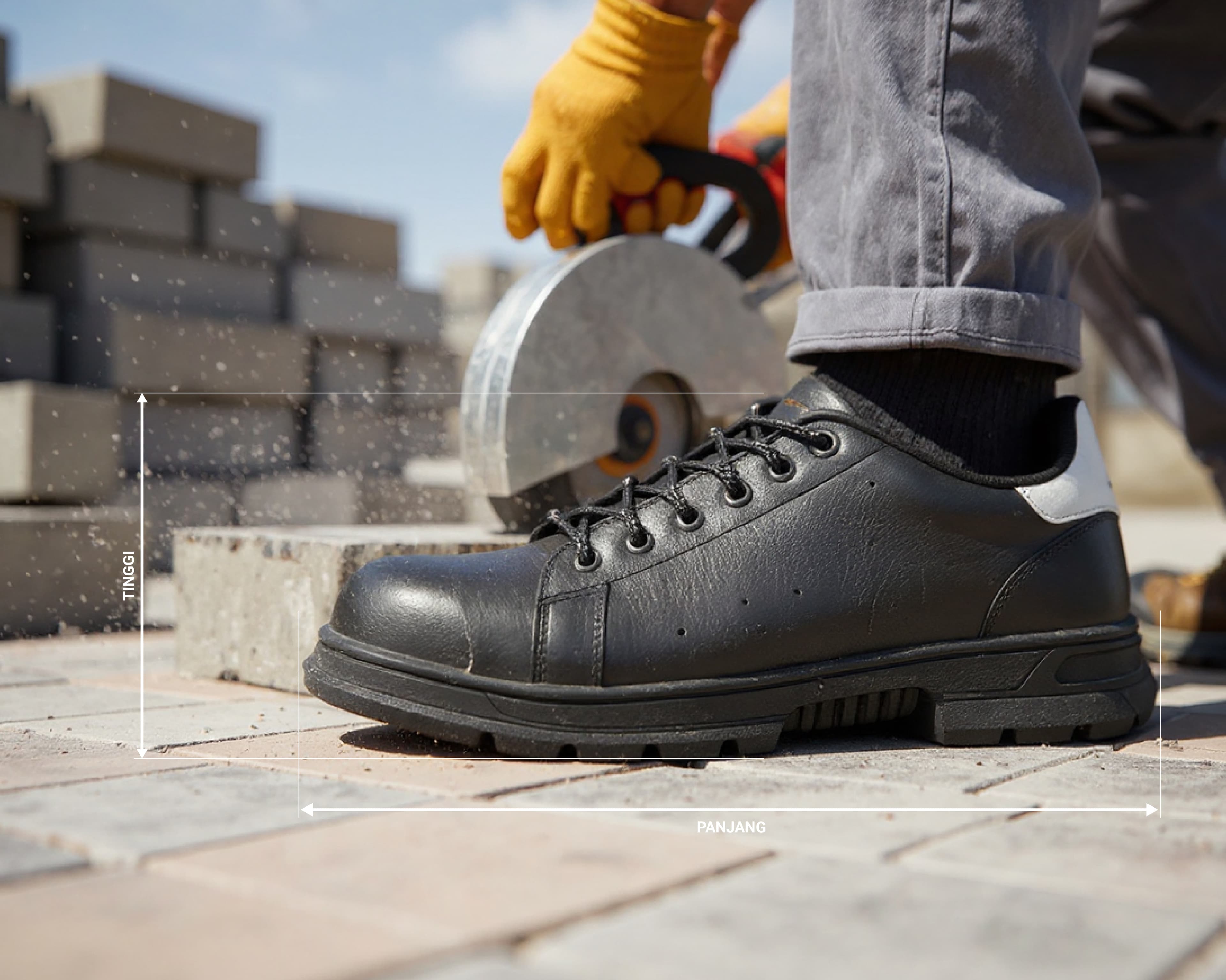
The Difference Between a Safety Boot and a Safety-Certified Boot
When you're writing a procurement specification for safety footwear, the document you receive from a supplier looks convincing. It has logos, certification marks, a product photo with a worker smiling in a hard hat, and a price that seems reasonable.
What it often doesn't have is the information that actually matters: whether those boots hold up on a site with mixed surfaces at hour eight of a long shift, in Indonesian humidity, on a worker's foot.
A safety boot is a boot with safety features.
A safety-certified boot has been tested against a defined standard, by an accredited testing body, and found to meet all the performance requirements of that standard. The certification isn't about the idea of the boot — it's about the actual, tested performance of the boot.
In Indonesia, the relevant standard is SNI 8877.2023 — the Indonesian National Standard for safety footwear. A boot that carries this mark has been tested for:
- Impact resistance: Can the toe cap absorb a 200-joule impact without deforming?
- Compression resistance: Can the toe cap bear a load of 15kN without bottoming out?
- Slip resistance: Does the outsole maintain grip on wet steel and wet ceramic?
- Oil resistance: Does the outsole resist degradation in petroleum-based oils?
- Antistatic properties: Does the boot allow static charge to dissipate safely?
- Anti-puncture: Can the midsole resist penetration by a sharp object under specified force?
What to ask your supplier: Can you provide the SNI certification number and the accredited testing body? “We are certified” is not the same as “our certification is registered and verifiable.”
The Anatomy of a Safety Boot
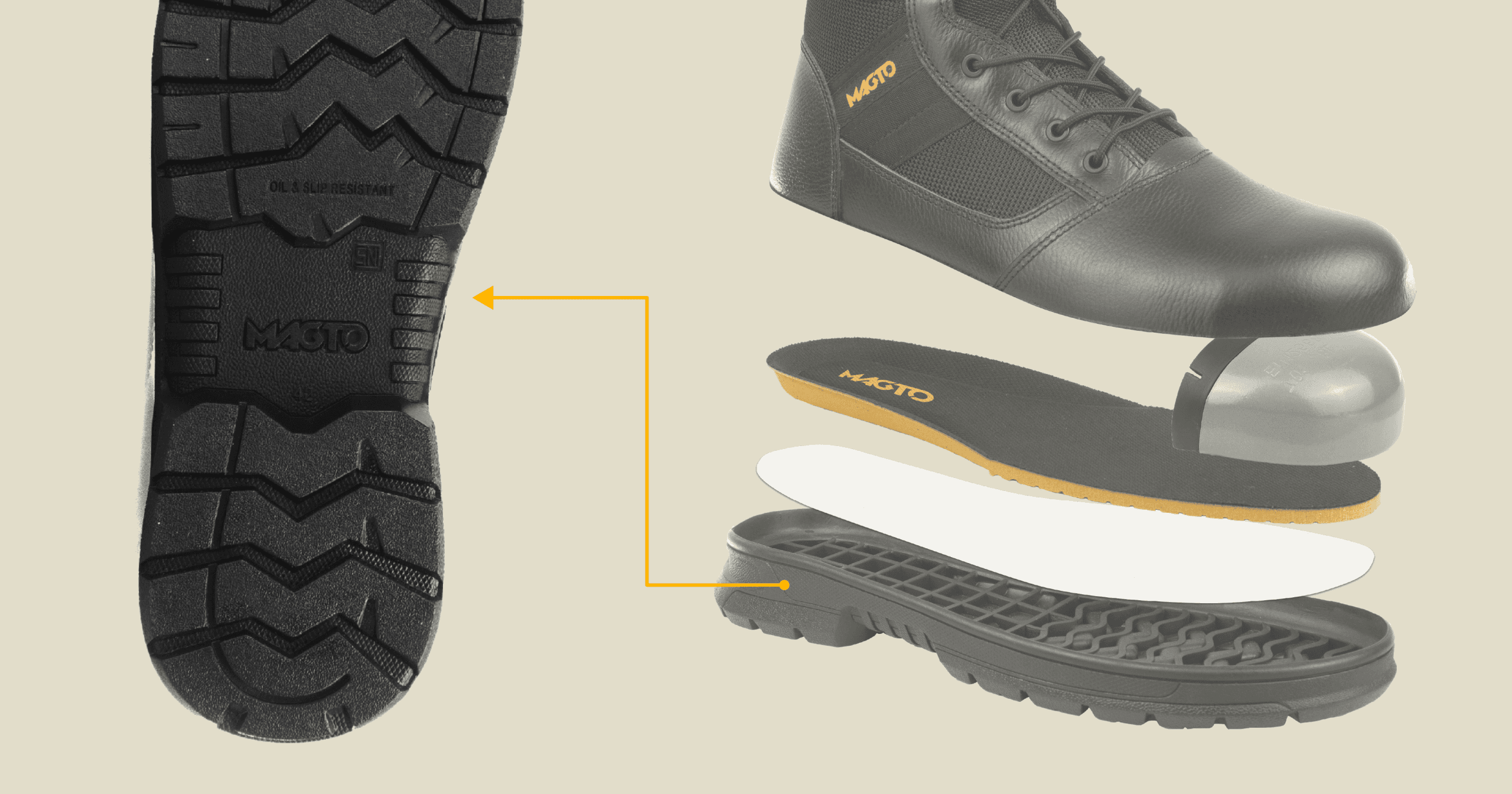
1. UPPER
In a quality safety boot, the upper is genuine leather — full-grain or top-grain, not corrected-grain or split leather. Full-grain leather is more expensive, but more durable, more breathable, and more resistant to moisture and flex cycles that break down inferior materials over time.
On Indonesian sites — hot, humid, with workers on their feet for eight to twelve hours — the breathability of the upper matters as much as its durability. A boot that traps heat causes fatigue and discomfort.
What to look for: Genuine leather upper with breathable mesh lining.
What to question: Any boot described only as “synthetic upper” or “PU leather” in a product described as professional safety footwear.
The Toe Cap
Steel toe caps are the most common and for good reason. They're proven, cost-effective, and meet SNI 8877.2023 requirements without difficulty. Composite toe caps — fiberglass, carbon fiber, or kevlar — are lighter, which workers notice over a full shift.
What matters most is the rating, not the material. Both steel and composite toe caps can meet SNI 8877.2023. The spec sheet should show the impact rating (200 joules) and compression rating (15kN).
What to look for: Steel or composite toe cap rated to 200-joule impact, 15kN compression.
The Outsole
The outsole is where the boot meets the site — and where most safety boot failures occur. A good safety boot outsole is rubber (not PU), with a defined tread pattern that channels water and debris away from the contact surface.
Key properties: anti-slip on wet surfaces, oil-resistant, and antistatic.
What to look for: Rubber outsole with defined tread pattern, anti-slip, oil-resistant, and antistatic.
What to question: A boot that describes the outsole only as “PU sole” or doesn't specify the outsole material at all.
2. THE INSOLE AND MIDSOLE
A quality safety boot has a removable molded EVA insole. EVA provides good shock absorption while being durable and washable. A removable insole allows the worker to replace it as it compresses over time — extending the usable life of the boot.
What to look for: Removable molded EVA insole with fabric top coat.
What to question: Boots with non-removable insoles. When the insole compresses, a non-removable insole means replacing the entire boot.
The Five Questions to Ask Before You Order
- Can I see the SNI certification document — not just a copy of the certificate, but the test report?
- Is this a production-monitored certification or a one-time test?
- What is the expected lifespan of this boot under Indonesian site conditions?
- What is your return rate?
- Do you offer trial orders?
The test report shows the actual test results. A certificate can be faked. A test report with a registered certification number is harder to fake.
A production-monitored certification means every batch is audited — not just the sample that was tested.
A good supplier will give you an estimated range — 6 to 12 months, 12 to 18 months — with a honest explanation of the variables.
Not “do you accept returns.” Ask: what percentage of orders have a quality complaint? A supplier with a high return rate will tell you more than any spec sheet.
A confident supplier will let you evaluate a small order before committing to a full bulk purchase. If a supplier refuses a trial order of 5 to 10 pairs, that's information.
The Indonesian Context That Most Buyers Miss
The relative humidity in a Jakarta warehouse in the wet season is not the same as the humidity in a German manufacturing facility. The surfaces on a newbuild construction site in Java are not the same surfaces tested in a European testing lab.
Humidity breaks down inferior lining materials. Mixed surfaces require versatile outsoles. Long shifts amplify every comfort issue. These aren't exotic requirements — they're Indonesian conditions.
Bottom Line
The right safety footwear for Indonesian sites is: SNI 8877.2023 certified (not just certifiable); made with genuine leather upper and rubber outsole; produced under production-monitored conditions; and available with trial orders so you can evaluate before committing.
Editor's Pick