How to Write a Safety Footwear Specification
That Actually Protects Your Workers (And Your Procurement Process).
9 June 2026
Written by Audrey Tan
Start With the Worker, Not the Standard
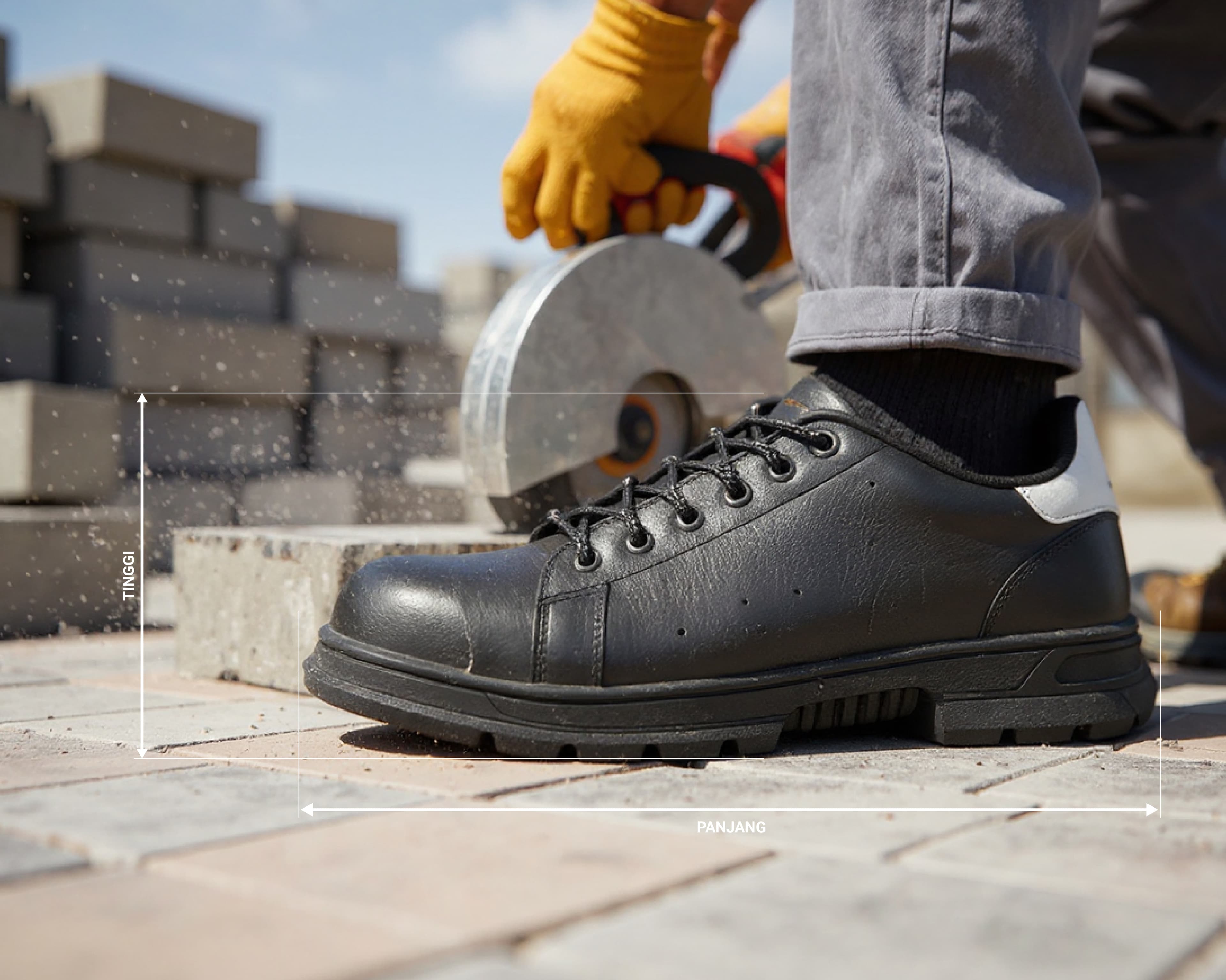
Before you open a standards document or call a supplier, spend half a day on a site. Watch what workers actually do with their boots. When do they take them off? What surfaces are they walking on? What time does foot fatigue set in? If you can't do a site visit, call your HSE lead and ask for the three most common foot complaints from the last safety audit. Those complaints are your spec's starting point.
The Components of a Complete Safety Footwear Spec
1. SCOPE AND PURPOSE
Define what the footwear is for. Not just “safety footwear” — specify the work environment, shift pattern, and hazards. “Safety footwear for workers in the concrete pouring area of a Phase 2 construction site, operating on mixed surfaces including wet concrete, compacted aggregate, and steel formwork — shifts of 10 to 12 hours.”
2. APPLICABLE STANDARDS
State the standard the boots must meet. In Indonesia, this is SNI 8877.2023. Write: “SNI 8877.2023 as certified by [accredited testing body], with test reports available on request.” This one addition eliminates most of the suppliers selling boots with copied certificates.
3. MATERIAL REQUIREMENTS
Specify by component, not by marketing language:
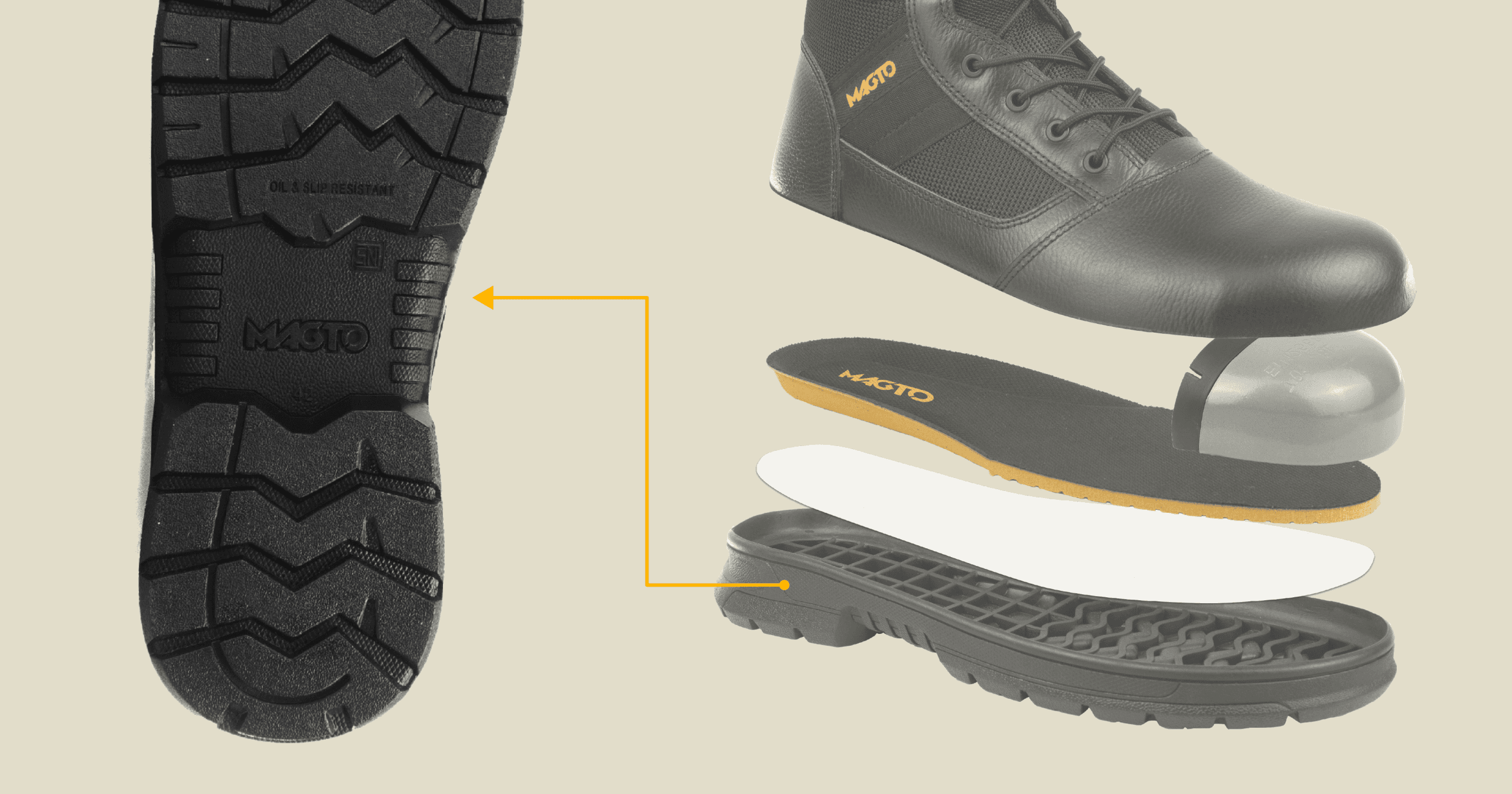
- Upper: Full-grain genuine leather, minimum 1.8mm thickness
- Lining: Breathable mesh, minimum
- Insole: Removable molded EVA, minimum 8mm at heel
- Outsole: Vulcanized rubber, not PU
- Toe: Steel or composite, rated 200-joule impact, 15kN compression
- Construction: Reinforced wall stitch (not glue-only)
4. REQUIRED PERFORMANCE PROPERTIES
- Anti-slip: Coefficient of friction ≥ 0.28 on wet ceramic, ≥ 0.18 on wet steel
- Oil resistance: No visible degradation after 22 hours in IRM 903 oil
- Antistatic: Resistance 100kΩ to 1000MΩ
- Anti-puncture: Midsole withstands 1100N without penetration
5. SIZING AND FIT
Specify the size range required and the supplier's replacement policy for sizing errors. State that boots with sizing discrepancies will be replaced at supplier cost.
6. BATCH CONSISTENCY REQUIREMENTS
This is the clause most procurement specs skip. State: “Each batch delivered must meet the same test criteria as the sample evaluated during procurement. Supplier must provide batch-specific test reports or quality documentation upon request.”
7. SUPPLIER EVALUATION CRITERIA
Before awarding the contract, require: SNI 8877.2023 test report from an accredited body; physical sample (minimum 3 pairs) for evaluation; trial order of 10 to 20 pairs before bulk commitment; references from at least two other procurement clients in similar industries.
Common Mistakes in Safety Footwear Procurement Specs
MISTAKE 1: SPECIFYING BY BRAND INSTEAD OF BY STANDARD
“Brand X safety boots or equivalent” limits competition and locks you into one supplier's pricing. Specify the standard first. Accept any boot that meets it.
MISTAKE 2: OVER-SPECIFYING UNNECESSARY FEATURES
Steel toe cap with electro-static discharge protection and metatarsal guard for an office warehouse worker isn't overkill — it's unnecessary cost. Match the spec to the actual hazard profile.
MISTAKE 3: IGNORING THE BREAK-PERIOD
A new safety boot takes 3 to 7 days to break in. During this period, workers are at elevated risk of blisters and discomfort. Build a break-in period into your safety protocol.
MISTAKE 4: NOT BUDGETING FOR REPLACEMENT
A boot with a 12-month lifespan costs X per year per worker. A boot with a 6-month lifespan costs 2X. Calculate total cost of ownership, not unit price.
How to Evaluate a Trial Order
- Measure every pair against the spec. Use calipers if needed.
- Flex test the outsole. Bend the boot at the forefoot. A rubber outsole will flex and return. A PU outsole will crack or take a set.
- Put them on. Walk 15 minutes on the surface your workers actually walk on.
- Ask your workers. Give the trial boots to the workers in the roles the spec is written for. Ask for honest feedback after one week.
- Check the stitching after one week. Any separation between upper and outsole is a red flag.
Bottom Line
A safety footwear spec that protects workers and procurement processes alike is built on three things: specificity about the work environment; component-level requirements; and batch consistency requirements. Write the spec for the worker first.
Editor's Pick