Steel Toe vs. Composite Toe
Which Is Right for Your Workers?
9 June 2026
Written by Audrey Tan
What Both Types Have in Common
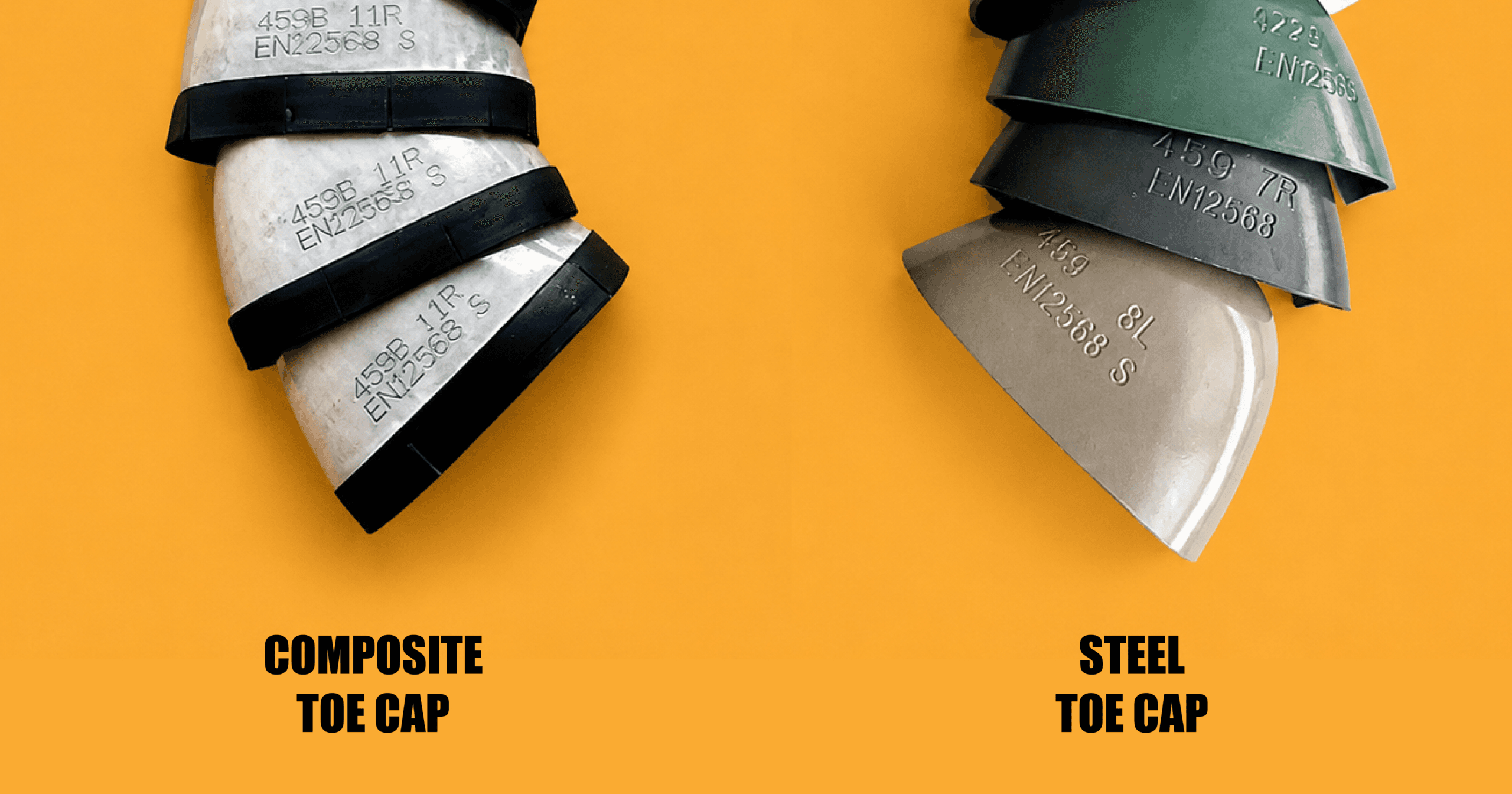
Both steel toe caps and composite toe caps are designed to do the same job: protect the toes from a 200-joule impact and a 15kN compression load. Both can meet SNI 8877.2023 requirements. The difference isn't the protection level — it's the material, the weight, and the secondary properties.
What Both Types Have in Common
A steel shell, typically 1.5 to 2mm thick, shaped to cover the toe box. It's been the safety footwear standard for decades.
- Weight: Adds approximately 30-50g per boot. Workers notice this over a full shift in mobile roles.
- Temperature: Steel conducts cold. In air-conditioned facilities or highland sites, this is noticeable.
- Durability: Steel doesn't degrade under UV exposure, doesn't crack with age, and maintains shape under repeated impact.
- Cost: Typically less expensive than composite alternatives.
Best for: General industrial, construction, manufacturing, warehousing — where cost-effectiveness and proven track record matter most.
Composite Toe Caps
Made from non-metal materials — typically fiberglass, carbon fiber, kevlar, or a combination, compressed and molded into a protective shell.
- Weight: 30-50g lighter per boot. Workers in mobile roles often notice this difference over a full shift.
- Temperature: Doesn't conduct cold. More comfortable in cold storage or air-conditioned environments.
- Non-metal properties: Doesn't trigger metal detectors. Relevant in food processing or electronics assembly.
- Durability: More brittle under extreme cold; may degrade faster under sustained UV exposure.
- Cost: Typically more expensive than steel.
Best for: Roles with significant walking or standing — site supervisors, HSE officers, logistics. Cold storage environments. Workers who report persistent foot fatigue from boot weight.
The Honest Answer
For most Indonesian industrial and construction sites, steel toe caps remain the practical choice — proven, durable, cost-effective, and well-suited to the conditions.
Composite toe caps are worth considering when: workers are in roles with high mobility; workers report persistent foot fatigue from boot weight; the facility is climate-controlled or in a highland area; the cost premium is acceptable for the comfort benefit.
The most important thing isn't the toe cap material. It's that whatever cap is in the boot is certified to SNI 8877.2023, and that the rest of the boot — the upper, the outsole, the insole — is built to the same standard.
Editor's Pick